Who Is Dora in Hades 2 – And What’s Her Curse?

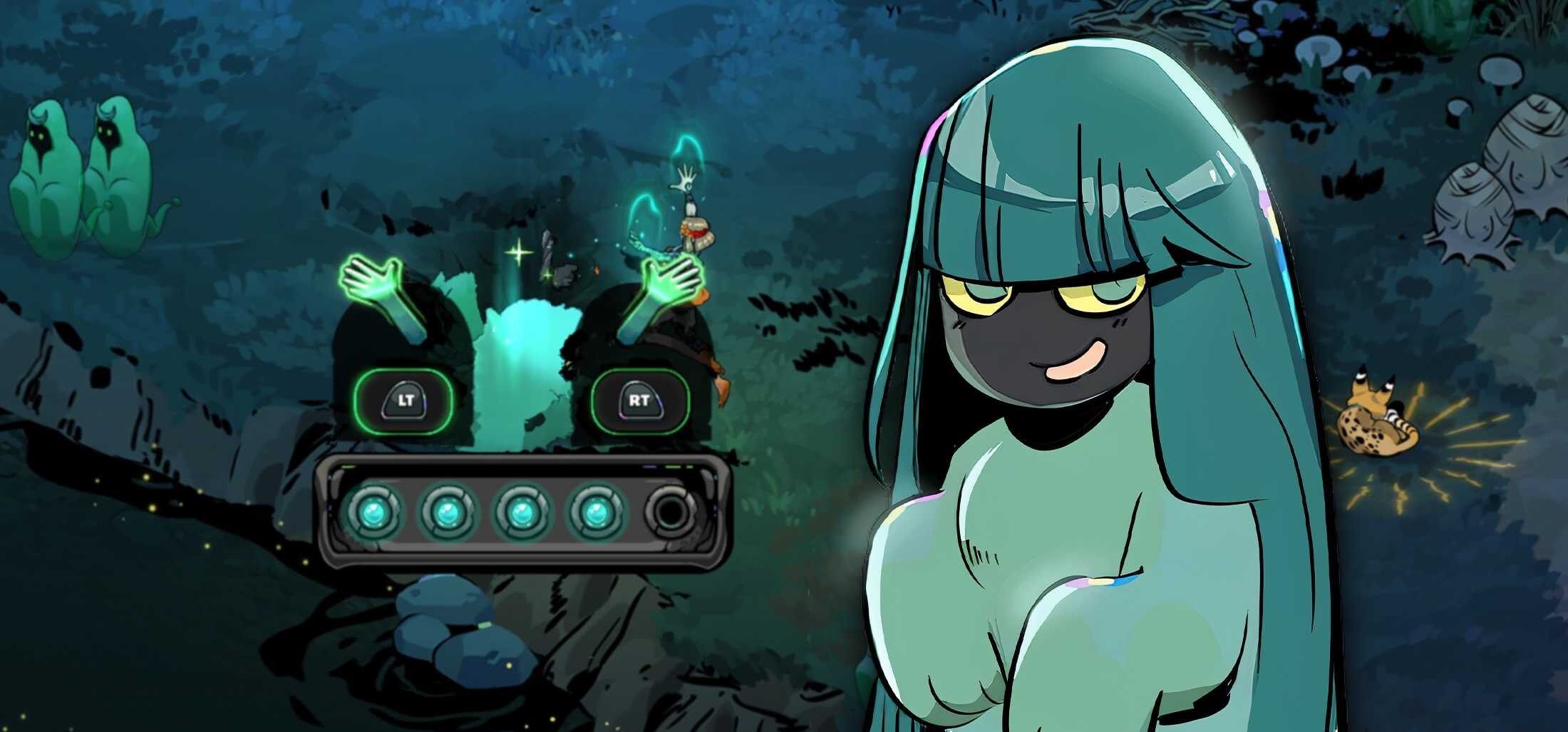
Dora is one of the most intriguing characters in Hades 2, a mysterious shade with lion paws and a forgotten past who accompanies protagonist Melinoë on fishing expeditions at the Crossroads.

The game strongly suggests she’s actually Pandora from Greek mythology, cursed with complete amnesia after deliberately drinking from the River Lethe to forget her traumatic mortal life.

The Pandora Connection
You don’t have to look too hard to see the connection. In the original Greek myths, Pandora was crafted by Zeus as the “perfect” woman. Each god gave her a gift—things like beauty, skill, and intelligence. She was created as an adult and given to Epimetheus (Prometheus’s brother) as a wife, all part of a bigger, divine trick.

But here’s the famous part: Zeus also made her incredibly curious and then gave her a container (it was a jar in the oldest stories, though you might know it as a box) with one rule: never open it.

This whole setup became one of mythology’s biggest cautionary tales. It’s a story about what happens when curiosity wins and how mortals often get caught in the middle of the gods’ games.

What Really Came Out of Pandora’s Box

So, when Pandora finally opened that forbidden container—driven by the very curiosity the gods gave her—she unleashed pure chaos.

All the worst things you can imagine flooded out: war, famine, anger, and every kind of earthly misery that’s plagued humanity ever since. These weren’t just vague ideas, either. Some were actual ancient beings and spirits, like Strife, that now had free reign in the world.

But here’s a crucial detail from the myth: hope was left behind at the bottom. One popular version says she slammed the lid shut before it could escape. This leaves us with a haunting question—was hope trapped inside to spare us, or was it withheld from us? That bittersweet ambiguity fits perfectly with the feeling we get from Dora in the game.

Dora’s Curse: Deliberate Amnesia

In Hades 2, Dora’s curse is total amnesia. She can’t remember her mortal life at all. There’s a moment where Melinoë mentions she must have been beautiful, and Dora just shrugs it off. Her attitude is pretty telling—she figures if her past was worth remembering, she’d actually remember it.

The big clue is that Dora herself believes this was her own doing. She casually guesses she probably “took a few swigs” from the River Lethe. In Greek myth, Lethe is the river of forgetfulness in the underworld. So, for Dora to choose that drink means her original life’s pain was so great that wiping her own memory felt like the only way out.

Physical Form and Personality

Dora appears as an ancient, statue-like shade with these striking lion paws—a detail that really makes her stand out, even in the Underworld. That stone-like, weathered look tells you she’s from a time long gone.

But don’t let her heavy past fool you. Her personality is all confidence and wit. She can joke with Melinoë about whether she’s being complimented on her voice or her “curves,” and she’s quick to play along when she’s being teased.

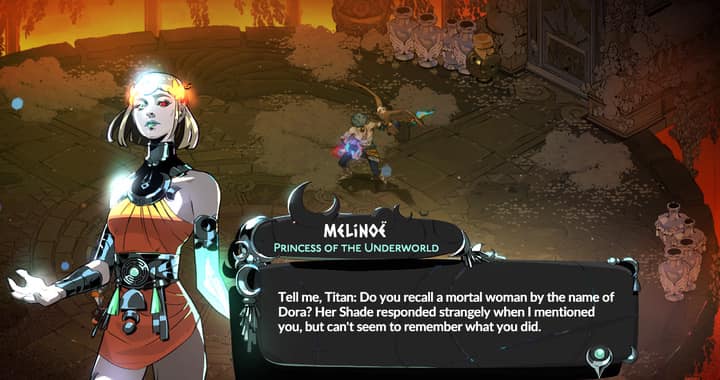
Melinoë points out that while other shades might shrink back, Dora never has. Their friendship feels easy and genuine, built on a real sense of mutual respect.

Her Role in the Underworld

Basically, Dora hangs out by the river and fishes with you. But we’re not catching bass—we’re pulling up these weird, sorrowful soul-creatures from the River of Lamentation.

Dora’s the one who starts making you think about it. She’ll wonder out loud if what we’re doing is really a kindness. Her point is, if a soul’s whole purpose is just to be sad at the bottom of a muddy river, then yanking it out might not be doing it any favors.

I usually argue back with a more hopeful view. I tell her we’re not forcing them out; we’re just giving them a chance. If they don’t like their new spot, that’s on them. To me, this little debate shows how Dora thinks. She’s got a slightly cynical, but really thoughtful, view on whether meddling in fate actually makes things better.

The Elysium Theory
There’s a theory I like about why Dora is where she is. Some players think Hades himself might have sent her to Elysium. Normally, Elysium is for heroes and the blessed, but Hades is the boss—he can make exceptions.

Think about it: if Dora is Pandora, she wasn’t really a villain. She was a pawn, crafted by the gods and cursed with the very curiosity that doomed everyone. She was more of a cosmic scapegoat. Sending her to a peaceful corner of the underworld could have been Hades’s way of showing mercy for an unjust fate.

It fits with her calm, routine existence now. But the real tragedy is that even if Hades did show her that kindness, she’ll never know.

By choosing to drink from the Lethe and forget everything, she erased any memory of the mercy she might have been shown. Her afterlife, just like her life, is now defined by a past she can’t even recall.

Dora’s Friendship with Melinoë

Honestly, Dora’s relationship with Melinoë feels like one of the most normal, down-to-earth connections in the whole game.

You can tell I’m genuinely curious about who she was before, even though Dora always brushes it off like it doesn’t matter. Our back-and-forth is easy and warm—it’s clear she’s become a real source of stability for me in the middle of all the chaos at the Crossroads.

More than anything, this shows how emotionally resilient Dora is. She doesn’t sit around mourning the life she lost. Instead, she’s fully embraced who she is now, finding contentment in simple things like fishing together and sharing her sharp, witty thoughts about the souls we pull up.

Whether that’s true peace or just a really good way of coping, it’s impressive. She’s figured out how to live with a curse that wiped her entire identity clean.

The Prometheus Connection

Pandora’s original myth is deeply tangled with Prometheus and his family, and that connection feels super relevant now that Prometheus is actually in our story, working his own mysterious plans.

In the old tales, Pandora was given to Epimetheus (Prometheus’s brother) as a “gift” from Zeus—but it was really a punishment, a trap meant to torment humanity and get back at Prometheus for stealing fire. So, right from the start, she was a pawn used to punish his entire family line.

Now, in Hades 2, there’s this growing sense that Prometheus—and even Heracles—might be playing a deeper game. If Dora really is Pandora, then that adds a whole new layer. It means a forgotten key player from that ancient divine conflict is right here in the middle of everything again. She has no memory of her role, but fate seems to have placed her right back in the orbit of the very story she helped set in motion.

What Her Curse Really Means

Dora’s choice to erase her own memory gets right to the heart of what Hades 2 is about: dealing with trauma, wrestling with fate, and finding small ways to rebel. She wasn’t just a passive victim punished by the gods.

It looks like she took the one way out she could find—drinking from the Lethe to stop reliving the pain of being Pandora. That one act changes everything. It turns her from a scapegoat into someone who, in a desperate way, took control of her own story.

It makes you think about who we really are. If Dora remembers nothing of being Pandora, is she still her?

Or is she someone new, just carrying an old curse?

The person she is now—confident, quick-witted, kind in her own way—might be nothing like the original Pandora. It feels like the game is asking us: is our past what defines us? And is letting go of a painful history an act of freedom, or is it its own kind of loss?

I love that the game never just says “Dora is Pandora.” They let you figure it out through hints, her design, and the way she talks. It respects you to know the myths and pick up on the subtext.

That moment when you realize the quiet fishing buddy with lion paws is actually the Pandora? It’s a fantastic payoff that makes the whole world feel deeper and more connected.