
Cinderia is the newest roguelike game trying to capture that special magic of hits like Hades. I played the current demo, and while it’s pretty rough around the edges, I can see real promise here.
It’s planning an Early Access launch in February 2025, and it could grow into something great—if the developers can smooth out its many technical issues.
Core Gameplay and Combat Mechanics
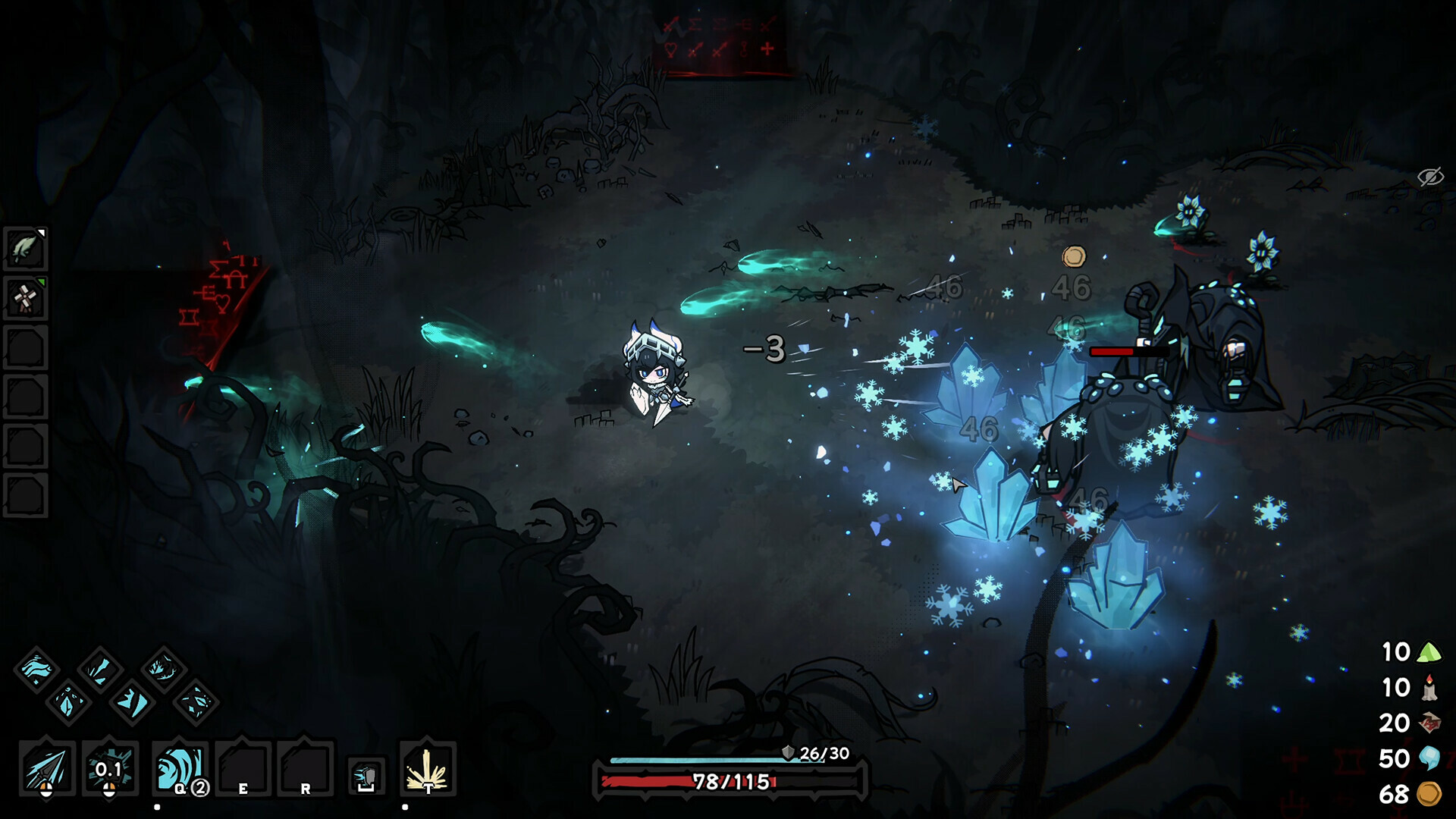
You’re thrown into fast, fluid combat with simple controls. You have basic melee attacks, a quick double dash, and a dagger throw on the B button.
Throwing daggers uses up energy, but landing melee hits builds it back. This creates a nice push-and-pull where you can’t just hang back and spam throws; you have to dive into the fray to keep your energy up. It makes the combat feel aggressive and involved.
At the start of each run, you pick one of three random power-ups that boost your abilities, like making your daggers poison enemies. This first choice really shapes how your run begins.
The Progression System and Build Complexity
Where Cinderia surprised me was in its deep progression systems. There’s a lot going on beneath the surface, though the demo does a poor job explaining it.
One cool system is Erosion. Some upgrades you find increase your Erosion percentage. Hit 100%, and you’re forced to take a permanent curse for that run. It’s a constant risk-reward choice that keeps you on your toes.
You also collect equipment that gives stat boosts. You can scrap stuff you don’t want for a purple currency, though I never figured out what it’s for in the demo.
The best part for me was the skill system. You find new active abilities during a run, like a stunning dash attack or a spinning blade tornado. Each skill can be upgraded multiple times, with a choice between two or three different paths each time.
Do you want your shadow summons to hit more times, or also generate a shield for you? These choices force you to commit to a specific playstyle, and it feels great when a plan comes together.
Build Synergies and Strategic Depth
The demo showcases impressive build variety despite limited playtime. One particularly effective strategy revolves around “wheel blades“—spinning projectiles that persist in place while expanding their rotation range. Multiple upgrades synergize with this mechanic, including dash-triggered wheel blade spawns, increased duration, and status effect applications.
By focusing exclusively on wheel blade-related upgrades, the build transforms from occasional supplementary damage into a primary kill mechanic.
Dashing constantly spawns additional blades while passive effects extend their duration, creating overlapping damage zones that shred enemies passively while players focus on positioning and dodging.
Shadow-based builds offer another viable path. Skills that summon shadows to attack enemies can be enhanced through numerous upgrades increasing shadow count, damage, attack range, and critical strike chance. Certain equipment pieces trigger backstab bonuses for shadow attacks, multiplying damage output substantially.
The multi-star capsule mechanic encourages cooperative thinking even in single-player. When players collect star capsules (which grant special attacks) near teammates in co-op or beneficial NPCs, they earn 20 bonus points per nearby entity.
This seemingly minor system rewards positioning awareness and creates strategic decision points about when to collect power-ups.
Boss Encounters and Difficulty Scaling
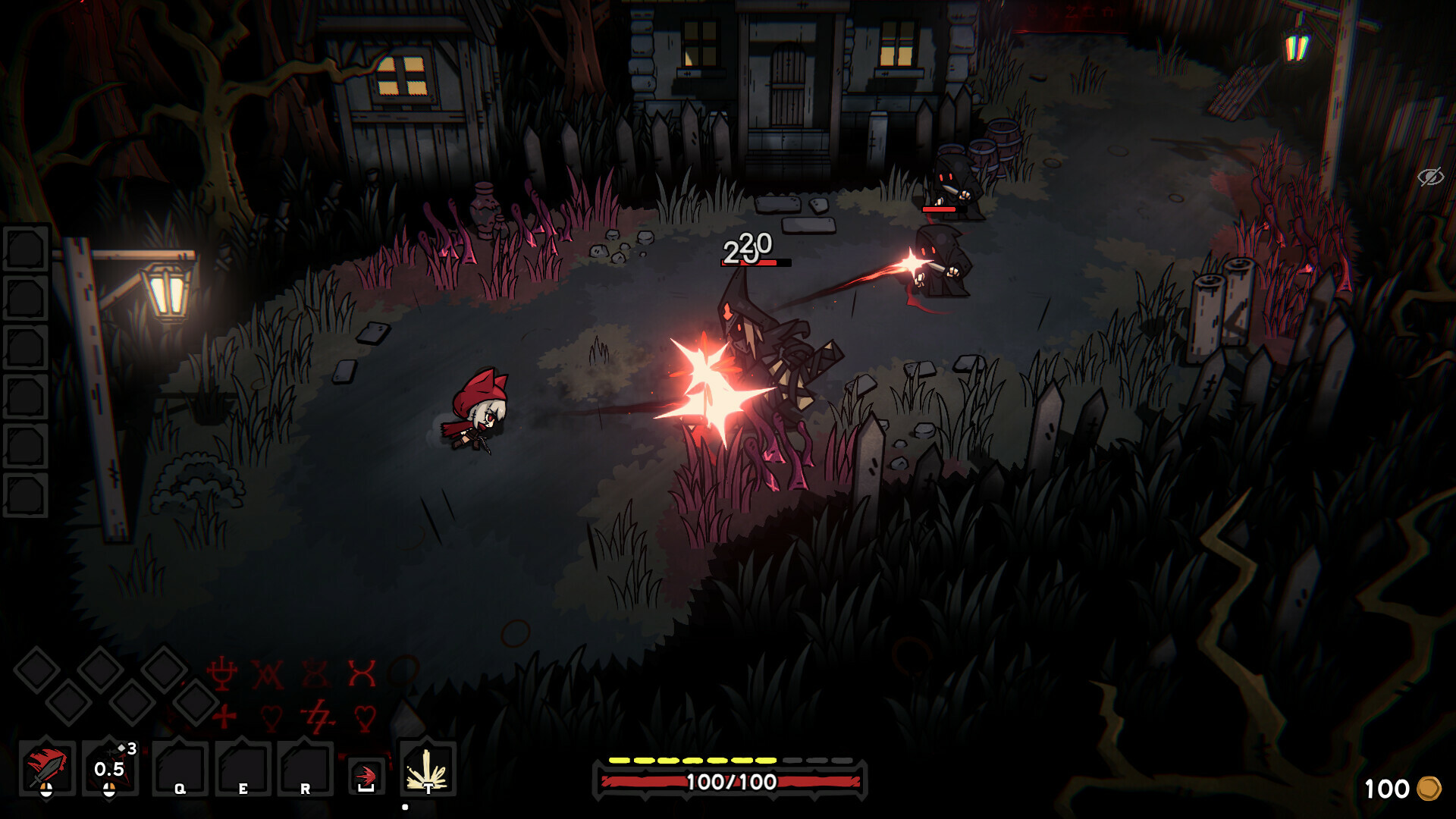
The demo features three distinct boss encounters, each introducing unique mechanics and attack patterns. The first boss serves as a relatively straightforward skill check, testing whether players have accumulated sufficient damage and understand basic dodge timings.
Boss two introduces phase transitions and adds environmental hazards to navigate simultaneously with boss attacks. The Evernight Fairy Queen creates shadow clones, forcing players to identify the real target while dodging attacks from multiple sources. This encounter specifically rewards builds with high area damage capable of quickly eliminating clones.
The third boss, La High Sacrificer of the Dark Horn Clan, represents a significant difficulty spike. This encounter features aggressive attack patterns, large area-of-effect abilities, and environmental hazards that can quickly overwhelm unprepared players.
The boss summons shockwaves requiring precise dodge timing while maintaining offensive pressure through projectile barrages.
Successfully defeating the third boss requires not just mechanical skill but optimized build construction. Players must have identified synergies, maximized damage output through skill upgrades, and collected sufficient defensive equipment to survive the extended encounter.
Technical Issues and Polish Concerns
Despite promising gameplay foundations, Cinderia suffers from numerous technical and presentation issues that significantly impact the experience.
- Audio balancing stands out as particularly problematic—certain sound effects like crashing waves dramatically overpower other audio elements, creating jarring volume inconsistencies.
- Visual clarity becomes problematic during intense combat encounters. Players struggle to track their character position, incoming attacks, and available cooldowns amid the particle effect overload.
- Translation issues permeate the experience. Item descriptions contain grammatical errors and unclear wording that obscure actual mechanical effects. These translation problems create unnecessary confusion about fundamental mechanics.
- The UI requires significant refinement.
- Sound design remains incomplete, with many attacks and impacts lacking appropriate audio feedback. This absence makes combat feel less impactful and reduces player ability to react to off-screen threats through audio cues.
Comparison to Genre Standards
Cinderia clearly draws inspiration from Hades, evident in its art style, upgrade system structure, and overall gameplay flow.
However, it currently falls short of that benchmark in nearly every category. Hades achieved success through exceptional polish, clear communication of mechanics, satisfying combat feel, and compelling narrative integration. Cinderia possesses none of these qualities in its current state.
The combat lacks the weight and impact that makes action roguelikes satisfying. Attacks feel floaty without substantial hit feedback, and enemy reactions to damage feel minimal. The absence of satisfying sound effects compounds this problem, making even powerful abilities feel underwhelming.
The progression system shows promise but requires clearer explanation and better integration. Players shouldn’t need to experiment blindly to understand basic mechanics like erosion thresholds or equipment recycling.
Hades excelled at teaching through natural play while Cinderia demands external research or trial-and-error learning.
Early Access Roadmap and Future Potential
The developers outline ambitious plans for the February 2025 Early Access launch. Promised content includes four additional chapters beyond the demo’s three areas, four playable characters each with unique movesets and progression trees, over 120 equipment pieces, and 160+ active and passive skills per character.
A shelter progression system will provide meta-progression similar to Hades’ house upgrades, allowing permanent improvements that carry between runs. Story content and music will flesh out the world and create narrative context currently absent from the demo.
Post-Early Access support promises continued updates and content additions, suggesting a live development approach that responds to community feedback. This model could address current shortcomings while building upon the solid mechanical foundation.
Verdict and Recommendations
So, here’s the bottom line on Cinderia: I see the spark of a great game here, but it’s buried under a lot of rough edges.
What works? The core combat is actually fun once you get into it. Building up your character with different skills and equipment has a satisfying depth, and even in the short demo, I found a few completely different ways to play that all felt powerful. That’s a strong sign for its replayability down the road.
But, I can’t honestly tell most people to play it right now. The translation glitches, audio problems, and visual chaos during fights create real friction. They get in the way of the good stuff underneath.
If you’re the type of player who loves getting into a project early, testing broken builds, and giving direct feedback to developers, then keep this one on your radar for its February 2025 Early Access launch. You’d be jumping in to help shape its future, and the mechanical foundation is solid enough to make that interesting.
If you’re just looking for your next polished, must-play action roguelike—especially if you’re hoping for another Hades—you should definitely wait.
See how the launch goes and check the reviews after it’s had some time in Early Access. The potential for something special is there, but the team needs to prove they can sand down all those jagged edges first.