
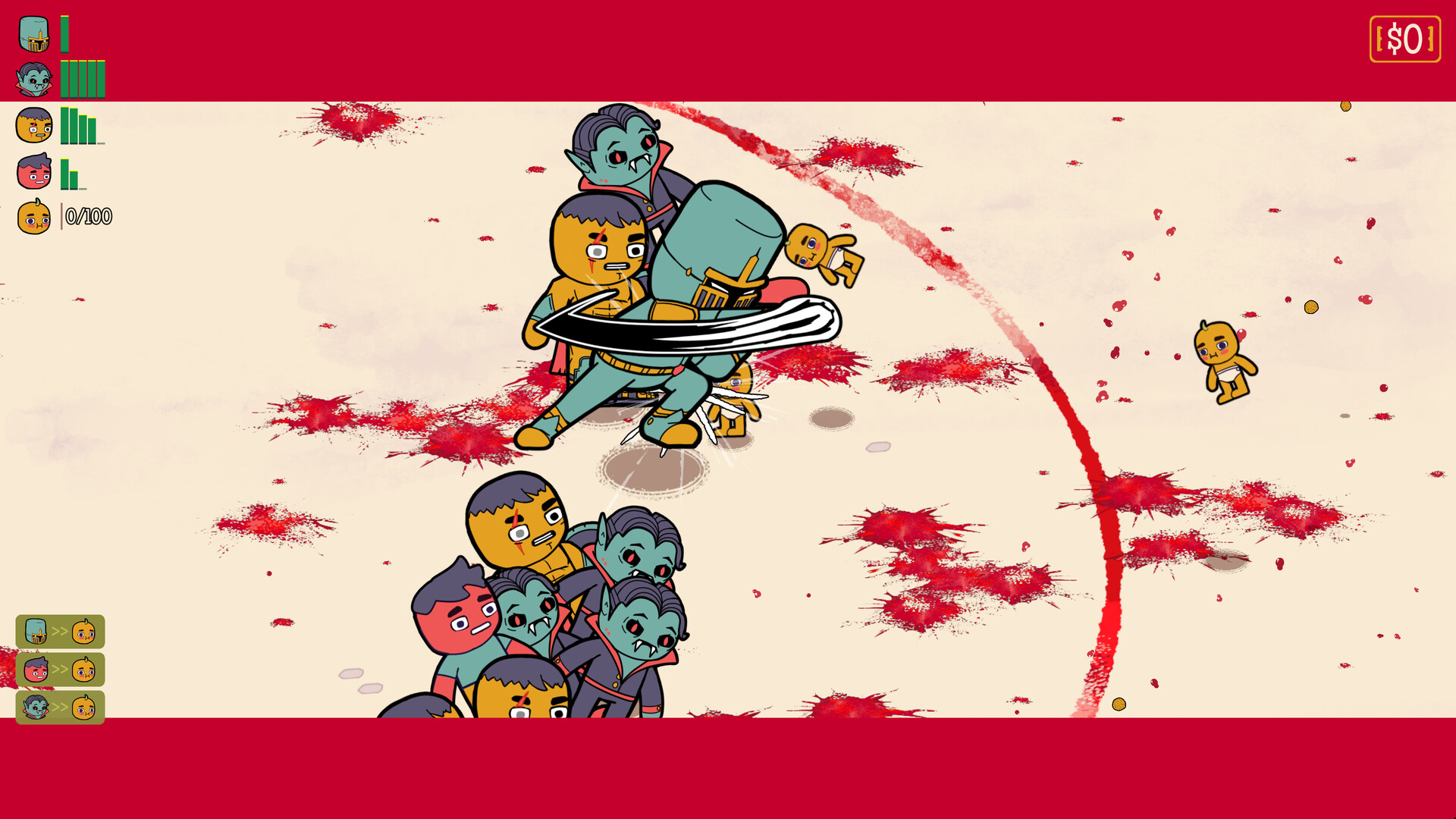
I recently tried out a hilariously chaotic pre-alpha demo called How Many Dudes? — a roguelike autobattler where your only goal is simple yet absurd: survive waves of toddlers, ducks, goats, and even horse-sized enemies.
In my one-hour session, I dove into the mechanics, tested different “dude” classes, and now sharing my raw first impressions via this post.
The Premise: Roguelike Meets Idle Auto Combat
The title screen calls it a “pre-alpha demo,” which instantly made me laugh. “It’s funny it calls itself that when I’ve already done a bunch of runs,” I joked. Even early on, the game already feels like it has real stuff to do.
The gameplay loop kicks in fast. You battle waves of enemies — starting with ten angry toddlers — but unlike most action roguelikes, this is a true autobattler. You don’t attack directly; you build your team and watch the chaos. Your strategy comes from who you hire, where you place them, and what relics or buffs you pick.
Right away, I noticed there’s no manual control or speed-up option early on. Fights play out in real time, and you can only slow things down a little. For a game that’s both a roguelike and an autobattler, that choice says it all — less clicking, more thinking.
The First Recruits: Building the Dream Team of Dudes
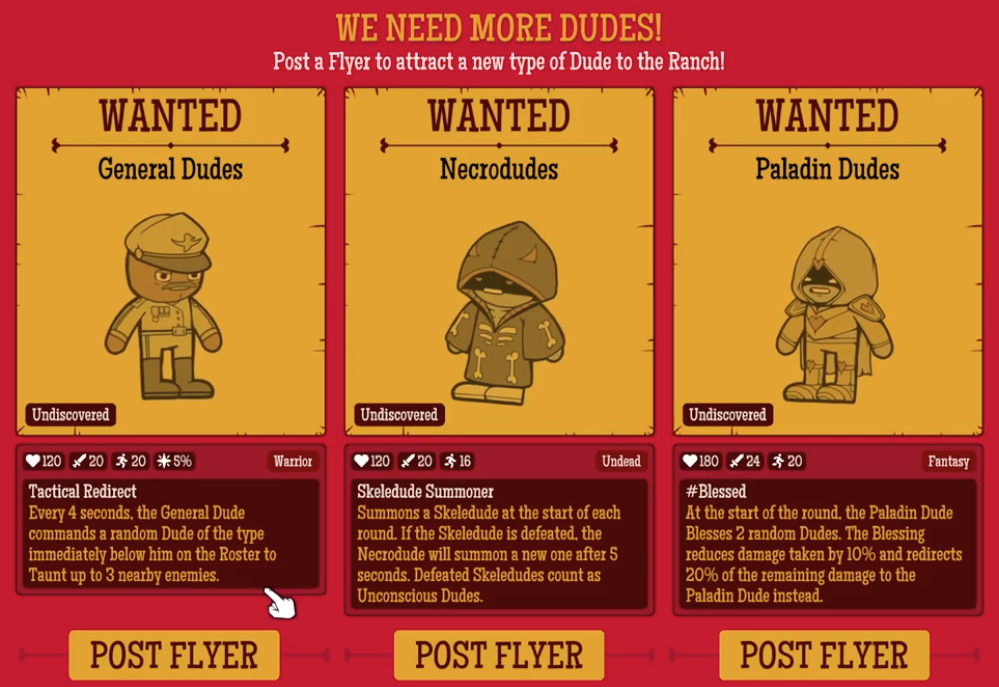
The first few minutes feel oddly relaxed. Early toddler fights go smoothly enough to earn some cash and start building a lineup. Recruitment is the core of the game. Each “dude” type has unique stats and abilities that work together. Part of the fun is the naming — Paladin Dude, Bard Dude, Warlock Dude — playful takes on classic RPG roles.
When I met my first options, I checked them over like a careful dungeon master. Your early picks include:
General Dude – Commands others to taunt enemies, working like a tank.
NecroDude – Summons skeletons that respawn a few seconds after they die.
Paladin Dude – Blesses two allies so they take less damage and shares some of what’s left.
Risk or Reward: Choosing Fights and Relics
The Paladin dude Era: Tank Up and Bless Everyone
My strategy became clear early on: more Paladins, more protection. Every time the game offered another Paladin Dude or a related relic, I doubled down. By stacking the same archetype, I built a defensive army where everyone shielded and blessed each other. You could see the synergy—relics that made blessings stronger, last longer, or redirect more damage really stacked up.
But even with heavy defenses, the game chipped away at my team. During a round against goats and ducks, I lost a paladin. I didn’t panic, though. I kept going, balancing between replacing units and buying upgrades. “We can deal with that,” I shrugged, treating the loss as a lesson in managing my resources.
That’s when you see How Many Dudes? is more than a joke. Behind the silly names, you find the number-crunching and pattern-spotting of a real roguelike—tinkering with builds, watching how things interact, and adapting when your plan falls apart.
Enter the Bard Dude: The Power of Buffs and Beats
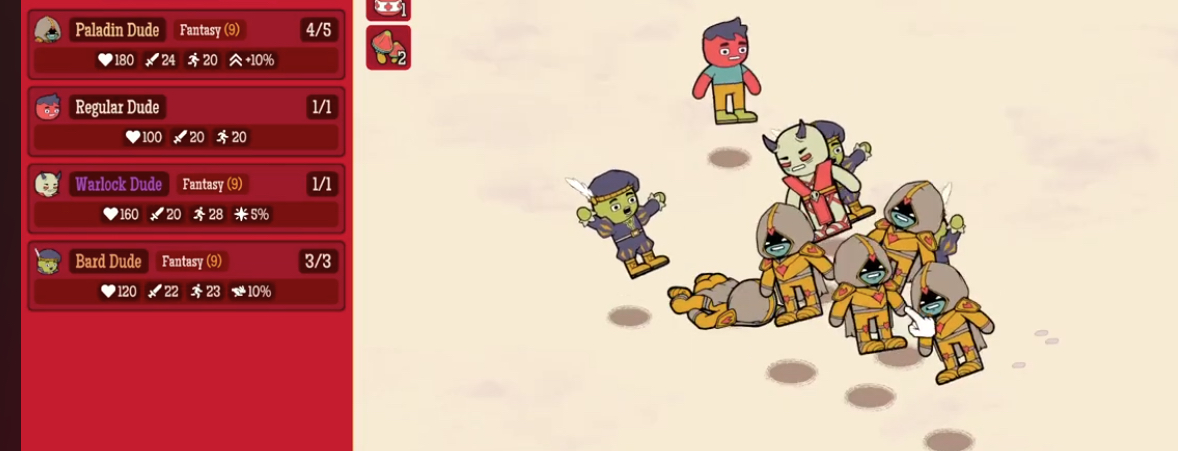
Just as my paladin setup felt solid, a new recruit shook things up: the Bard Dude. Every four attacks, the bard plays a song that buffs four random allies, boosting their damage and speed for a few seconds. Those buffs stack, so multiple bards can really scale up your team’s power.
I wasn’t sure at first. But once relics started boosting bard songs—making them last longer, add evasion, or even damage enemies—their value became clear. Soon, I was deciding: should I mix bards with my paladins or go all-in on one type? The hybrid build eventually won out.
Relics like the Overcharged Amp made bard songs hurt nearby enemies. Another granted extra evasion and triggered more songs after a successful dodge.
Before long, the battle sounded like a rhythm game—bards playing, paladins blessing, and ducks exploding in waves.
New Classes, New Chaos: Warlocks, Clerics, and Vampires
Halfway through my run, the game introduced more advanced types: Warlocks, Clerics, and later, Vampire Dudes. Each one added a new layer to my strategy.
Warlock Dude stores 90% of incoming damage, releasing it slowly over four seconds. He’s like a delayed-reaction tank.
Cleric Dude finally added healing, sending out pulses of health to the most injured ally every few seconds.
Vampire Dude heals himself by dealing damage, turning offense into survival.
Adding healers and sustain changed everything. Fights were no longer just about blocking damage—now I could recover, too.
The “Dude Juice” Mechanic: Resurrection and Recovery
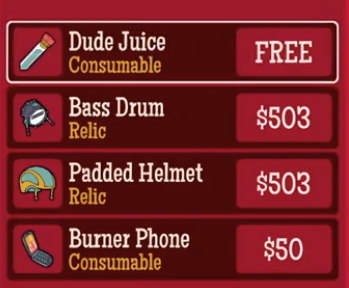
Between fights, you can spend cash or items to revive knocked-out teammates with something called “Dude Juice.” It’s a soft resurrection system—you can use it mid-fight in a pinch, or more effectively between rounds to bring back multiple dudes.
That balance—between pushing ahead and keeping your team alive—is where the real challenge lies.
Scaling Up: From Toddlers to Ducks to Monster Bosses
As my run went on, the waves got wild. What started as 10 toddlers became “90 toddlers,” “26 goats,” “horse-sized ducks,” and even “75 duck-sized horses.” The ridiculous enemy names only added to the charm.
But don’t let the humor fool you—the fights have real depth. Big enemies often focus your weak units or jump on hurt ones, forcing you to position your support carefully.
When the first real boss hit—announced by a change in the music—I got serious. I used consumables like my Bottle of Lightning, which deals random thousands of damage, and watched everyone’s health closely. Thanks to some lucky heals and strong Paladin blessings, I took the boss down and only lost one bard.
Lessons in Team-Building and Balance
A Promising Chaos Machine in the Making
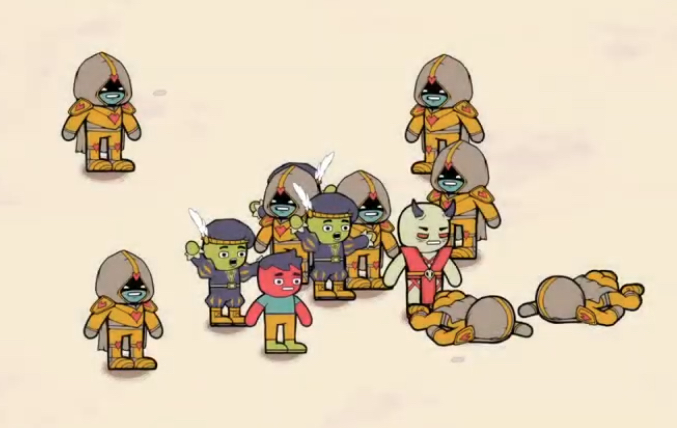
By the end of my playthrough, I was genuinely impressed. For a “pre-alpha demo,” How Many Dudes? packs a surprising amount of depth under its ridiculous presentation. It’s both a parody and a real prototype—a game where the absurd premise hides carefully tuned mechanics that would fit right into polished roguelites like Vampire Survivors or AutoChess.
The humor never lets up, from items like Dude Juice to shops selling Pocket Dice and Bottles of Lightning. But behind every joke, there’s a small tactical puzzle waiting for you to solve. For me, that blend hits a real sweet spot.
I will admit the early content can feel a little repetitive—“it might seem kind of simple at first.” But the demo already lays the foundation for a really compelling loop of experimentation, optimization, and those random stories that just happen on their own.